FREE CONSULTATIONS 443-278-1562

AVAILABLE 24/7443-278-1562

Fall 2026 Winner of the Overcoming Homelessness Scholarship
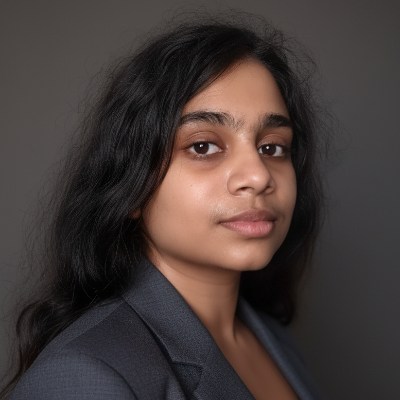
Soumya Vatti
Meet Soumya Vatti, the inaugural recipient of the Overcoming Homelessness Scholarship! Soumya returned to college while living in a shelter, studying at night on borrowed Wi-Fi and still maintaining a 4.0 GPA. That determination has carried her into entrepreneurship and consulting, where she is working to help systems better serve the people who rely on them.
Read Their Essay Here:
Homelessness did not feel the way I expected it to feel. It did not feel dramatic. It felt administrative. Suddenly, every part of my day required a calculation that used to be automatic. Where do I sleep? Where do I study? Where do I charge my phone? Where do I find internet reliable enough to submit an assignment? How do I get to class? How do I get back? How do I do any of this without anyone knowing?
I was living in a shelter during my second attempt at college. I had already lost a year of high school to bipolar I disorder, already dropped out of college once, and already run out of options that felt safe. The shelter gave me a cot and a roof. It did not give me privacy, consistent internet, quiet, or any sense of when the situation would change. I attended classes during the day. I studied at night using borrowed Wi-Fi, in libraries, in public spaces, wherever I could find a connection. I managed a mental health condition that requires structure inside an environment that had almost none.
I did not tell my classmates. I did not tell my professors. I showed up, did the work, and maintained a 4.0 GPA. From the outside, I looked like any other student. From the inside, I was running a second shift of logistics every day just to remain a student at all.
That was the experience. Here is how it has affected me since.
I do not trust stability. Not because I am pessimistic, but because I have learned that stability is not a default condition. It is something that can disappear without warning, and when it does, the only thing that determines whether you survive it is how quickly you can rebuild. I plan for instability now. I build margin into my schedule for bad days. I keep backup plans for things most people assume will just work. That is not anxiety. It is pattern recognition.
I still attend college under a homeless tuition voucher. The voucher covers tuition and nothing else. I work part-time to cover textbooks, food, and transportation. Last semester, my bank account went negative buying course materials. This semester, financial pressure forced me to drop to part-time enrollment for the first time since I came back. The homelessness may be behind me in the literal sense, but the financial instability it left behind is not. I am still operating inside the consequences.
Homelessness also changed what I want to build. I founded Melo AI, a mental health app, because I spent years needing support the system did not provide. I intern at Accenture in water infrastructure consulting because I understand, at a level most people do not, what it means to be inside a public system that falls short of reaching the person it was designed for. Both of those directions came from the experience of being unseen inside a structure that was supposed to help.
I have been affected by homelessness in the way that a bone is affected by a break. It healed. It is functional. But the structure remembers, and everything I build on top of it is built by someone who knows what it feels like when the ground is not there








Contact Us
Main Location:
7310 Ritchie Hwy., #200
Glen Burnie, MD 21061
Contact:
443-278-1562
Social Media:


Our Other Office Locations
Baltimore Location
400 E Pratt St, 8th Floor
Baltimore, MD 21202
443-278-1562
Columbia Location #1
5457 Twin Knolls Road, Suite 300
Columbia, MD 21045
443-278-1562
Columbia Location #2
10480 Little Patuxent Pkwy Suite 300
Columbia, MD 21044
443-278-1562
Crofton Law Office
2087 Lower Court
Crofton, MD 21114
443-278-1562
Frederick Law Office
321 Ballenger Center Dr. Suite 202
Frederick, MD 21703
443-278-1562
Rockville Law Office
199 E. Montgomery Ave., Suite 100A
Rockville, MD 20850
443-278-1562
HOME
PRACTICE AREAS
CONTACT
 | 7310 Ritchie Hwy., #200 Glen Burnie, MD 21061 |
 | 443-278-1562 |
 | Available 24/7 |
7310 Ritchie Hwy., #200, Glen Burnie, MD 21061
443-278-1562
Results listed are not a guarantee or indication of future case results.


